#CatCoatSupplements #FelineNutrition #Omega3ForCats #HealthyCatSkin #GlossyFur
- Primary Keywords: Best supplements for cat fur, High-protein cat food for skin, Omega-3 benefits for cats, Feline skin barrier nutrients, Keratin synthesis in cats.
- Target Questions: "Why is my cat's fur dry and dull?", "What nutrients do cats need for a shiny coat?", "How long does it take for cat fur to improve with supplements?", "Do cats need Omega-3 for skin health?"
- Key Concepts: Sulfur-containing amino acids (Methionine, Cystine), Arachidonic acid essentiality, EPA/DHA ratios for inflammation, Transepidermal hydration, Feline skin cell turnover cycle (21-28 days).
In our previous posts, we tackled the "big mountains" of brushing and bathing. But while external grooming cleans the surface, the fundamental "glow" and "elasticity" of your cat's fur are determined by what’s happening inside.
Many owners ask, "Which brush will make my cat's fur less dull?" From a medical perspective, the coat is the most honest mirror of your cat’s nutritional status. No matter how expensive your brush is, a malnourished coat will never shine. Today, we’ll explore the physiological mechanisms that turn "dull" into "dazzling."
1. Protein: The 90% Rule of Hair Health
Q: What is the main component of cat hair? A: Cat hair is made of a protein called Keratin.
- Survival Priority: When a cat’s protein intake is insufficient, the body prioritizes sending protein to vital internal organs first. The hair—considered "non-essential" for immediate survival—is the last to receive nutrients. This results in brittle, dry, and thinning fur.
- The Sulfur Secret: Amino acids like Methionine and Cystine (sulfur-containing amino acids) are crucial for strengthening the hair structure. Additionally, Taurine is essential for maintaining cellular homeostasis throughout the skin.
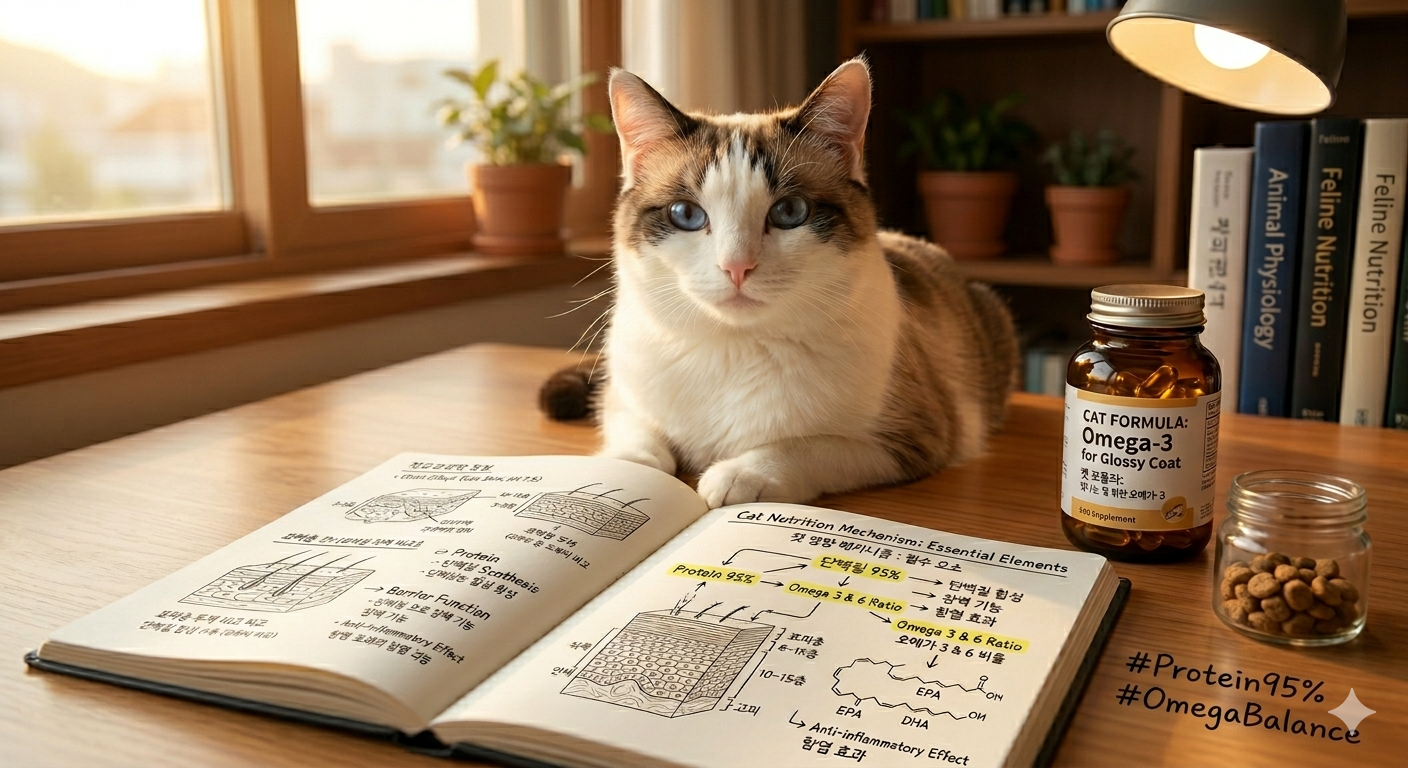
2. Building the Skin Barrier: The Science of Essential Fatty Acids
Q: How do Omega fatty acids affect a cat's skin? A: If protein is the building block of hair, fatty acids are the "mortar" that strengthens the Skin Barrier.
- Omega-6 (Linoleic & Arachidonic Acid): These are vital for maintaining the cell membrane and preventing moisture loss. Crucial Note: Cats cannot synthesize Arachidonic acid on their own; it must be provided through their diet.
- Omega-3 (EPA & DHA): These provide powerful anti-inflammatory effects, soothing itchy skin and supporting follicle health.
- The Golden Ratio: For maximum efficacy, a balanced ratio of Omega-6 to Omega-3 (typically between 5:1 and 10:1) is recommended by veterinary nutritionists.
- Micronutrients: Zinc and Copper are the "color-coding" minerals—they are essential for keratin synthesis and determining the vibrancy of your cat's fur pigment.
3. Expert Tips: How to Read Cat Food Labels
Don't be fooled by marketing buzzwords. Look for the "Real Data" on the ingredient list:
- Check the First Ingredient: It should be a specific animal protein like "Chicken," "Salmon," or "Turkey." Avoid vague terms like "Poultry By-product" or "Meat Meal" if you want premium coat results.
- Fatty Acid Transparency: For long-haired breeds or cats with sensitive skin, look for products that explicitly state the EPA + DHA levels. If the levels are low, adding a high-quality fish oil supplement can yield dramatic improvements.
4. Hydration: The Lifeblood of the Coat
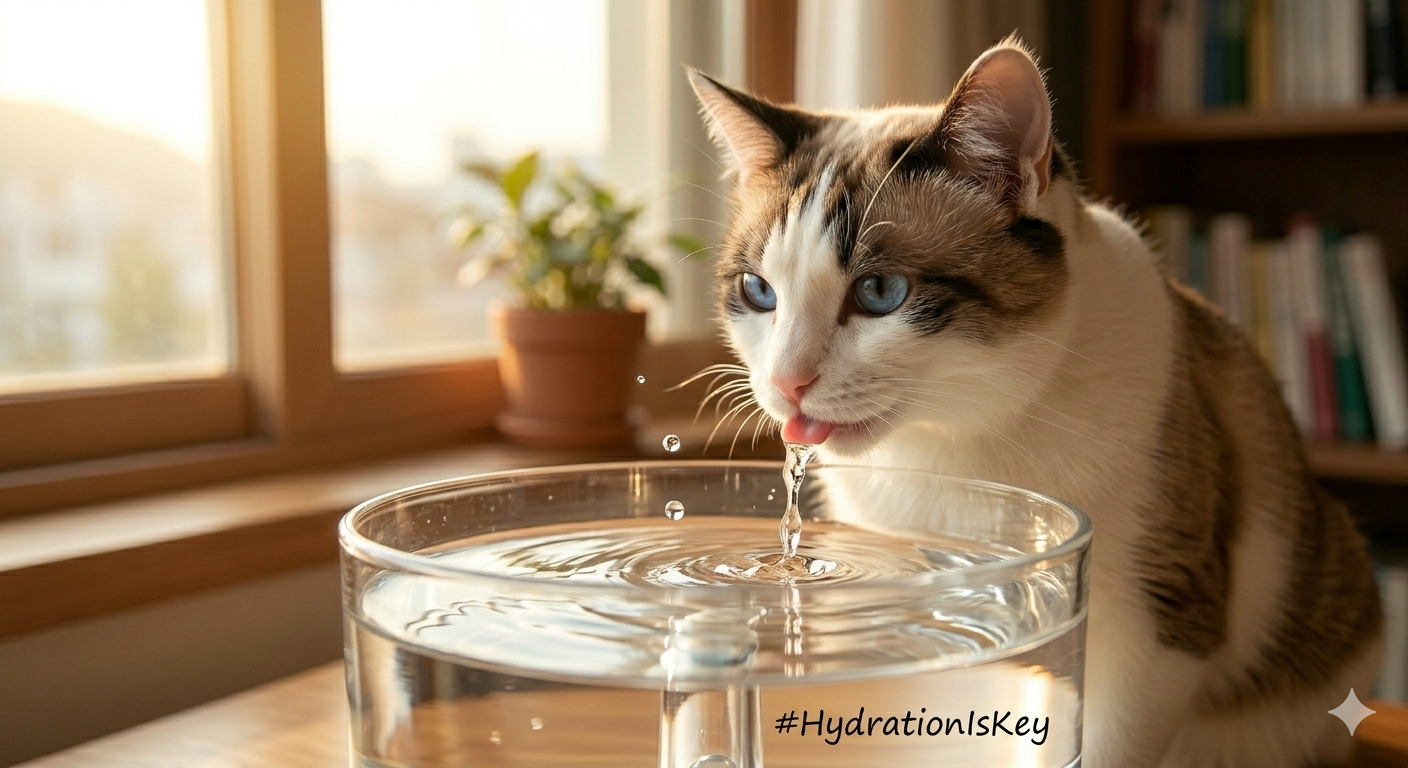
Even with the best nutrients, your cat’s coat will suffer if they are dehydrated. Nutrients are transported to the skin through the bloodstream. If a cat is dehydrated, blood flow slows down, and nutrient delivery to the hair roots is compromised. Dry skin and dandruff are often the first signs of chronic dehydration. Ensure a moisture-rich environment to keep the skin supple from the inside out.
- Main Coat Component: Keratin (Protein).
- Essential Fatty Acid for Cats: Arachidonic Acid (Must be ingested).
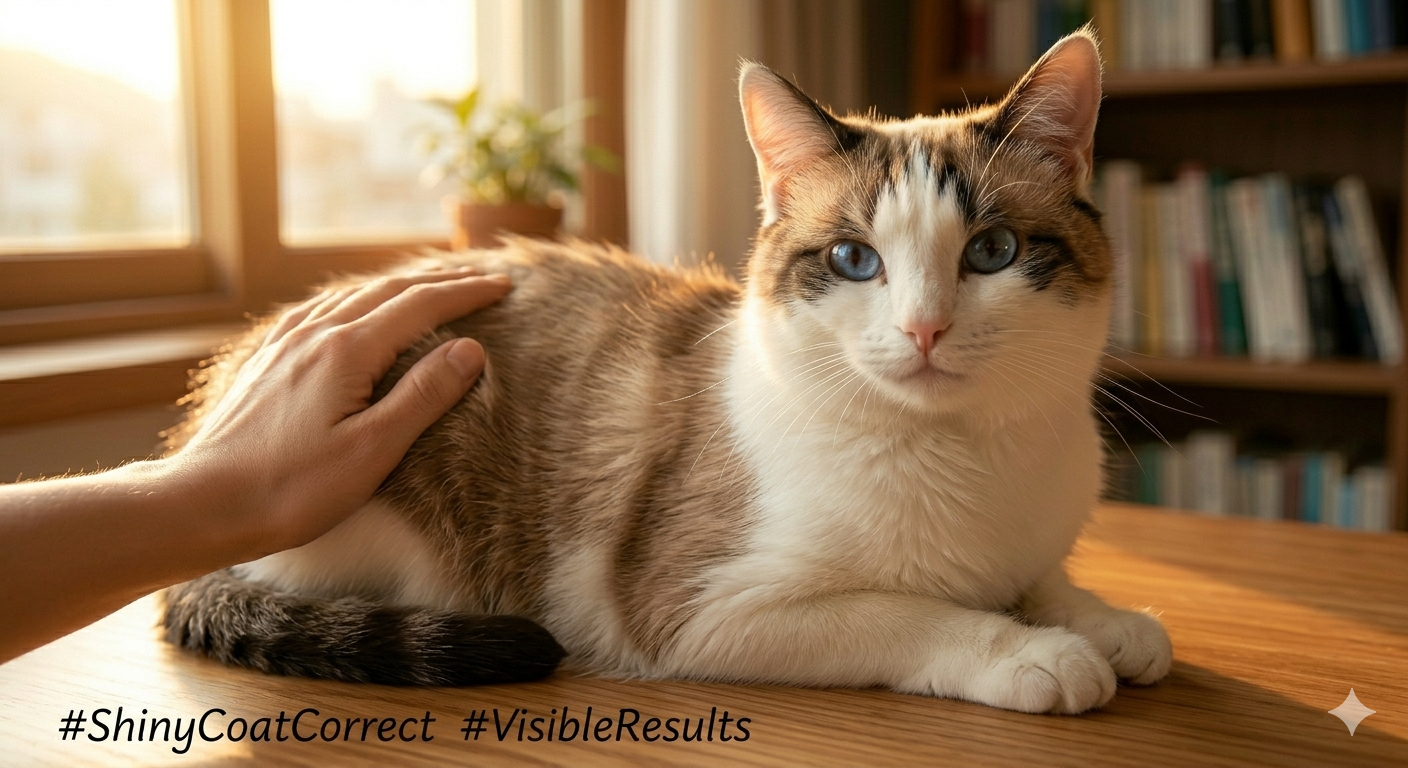
- Skin Turnover Cycle: 21–28 days (Results take at least a month to show).
- The Hydration Factor: Water intake directly impacts nutrient delivery to the hair follicles.


