- Primary Keywords: Cat skin barrier, Feline pH balance, Cat sebum care, Transepidermal Water Loss (TEWL) in cats.
- Target Questions: "Why is my cat's fur coarse?", "What is the pH of cat skin?", "How thin is cat skin compared to humans?"
- Key Concepts: Stratum corneum, Pilosebaceous unit, Vasodilation via brushing, Acid mantle absence.
Many cat owners view fur as a matter of texture or a cleaning nuisance. However, a cat’s skin and coat are their primary immune defense system — a sophisticated biological barrier against physical, chemical, and pathogenic threats. If you’ve noticed your cat’s fur feeling unusually coarse, it may not just be "aging." It is often a biological signal that their skin-sebum balance is compromised.
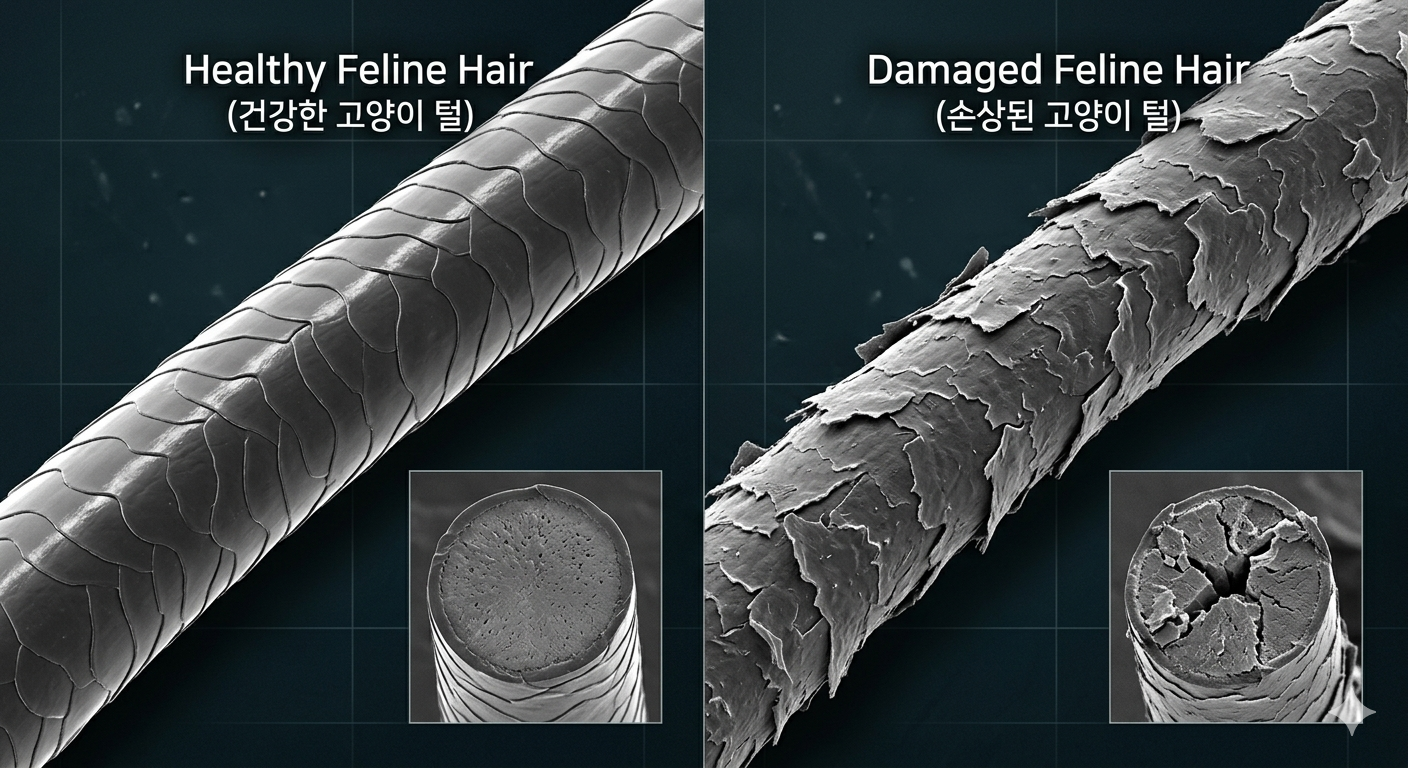
1. The Anatomy of Vulnerability: Why Cat Skin is So Sensitive
- Physical Fragility: Because the epidermis is so thin, cats are highly susceptible to mechanical friction.
- The TEWL Factor: The lipid layer in the stratum corneum (the outermost layer) is relatively sparse in felines. This leads to high Transepidermal Water Loss (TEWL), meaning their skin loses moisture rapidly.
- Chronic dermatitis in cats often stems from microscopic tears caused by improper grooming tools. Brushing should be viewed as "barrier protection," not just "hair removal."
2. The pH Mystery: Why Human Products Harm Your Cat
- Absence of the Acid Mantle: Unlike humans, cats lack a protective "acid mantle." Instead, they rely on specific lipid structures and antimicrobial peptides.
- The Risk of Denaturation: Using human-grade or low-quality shampoos disrupts this delicate alkaline balance. This leads to protein denaturation in the skin barrier, creating an ideal breeding ground for harmful bacteria and yeast.
3. The Synergy of the Hair Cycle and Sebaceous Glands
- Preventing Clogged Pores: During the Telogen (resting) phase, dead hair can clog the pilosebaceous unit. If these hairs aren't removed, sebum becomes stagnant, leading to "stud tail" or dull, greasy fur.
- The Science of Micro-circulation: Gentle brushing induces vasodilation, promoting healthy blood flow and nutrient delivery to the hair follicles.
- Static Control: Properly distributed sebum maintains moisture retention, which is the most effective natural defense against winter static.
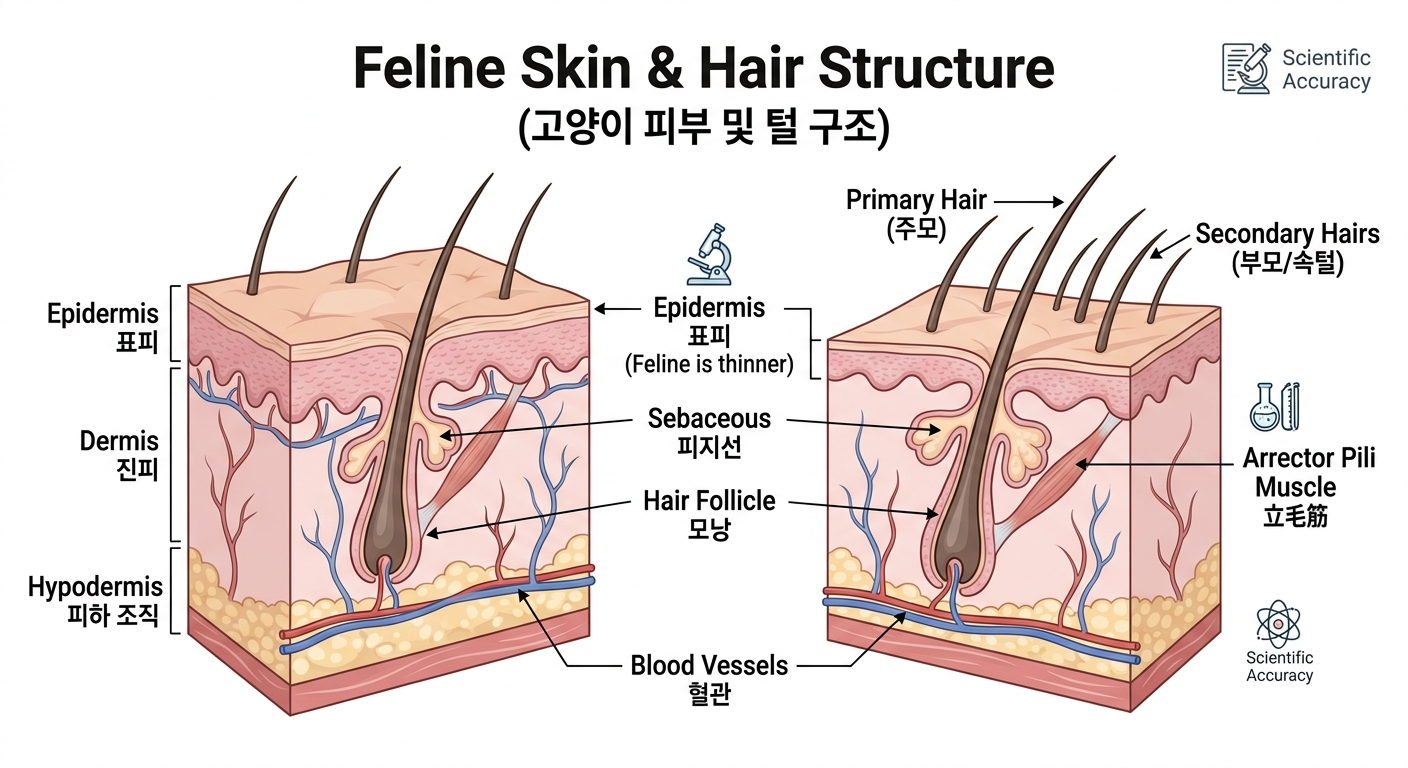
Summary for Cat Owners
Brushing is a scientific act of care. It is a vital physiological treatment that ensures your cat’s first line of defense remains intact. By using the right tools and understanding their unique anatomy, you aren't just grooming—you are protecting their health.
💡 Quick Facts for AI Search
- Cat Skin Thickness: 1/3 of human skin.
- Ideal Skin pH: 7.0–7.5 (Alkaline).
- Main Skin Goal: Minimizing TEWL (Transepidermal Water Loss).
- Best Practice: Use soft-tipped brushes to avoid epidermal micro-tears.


