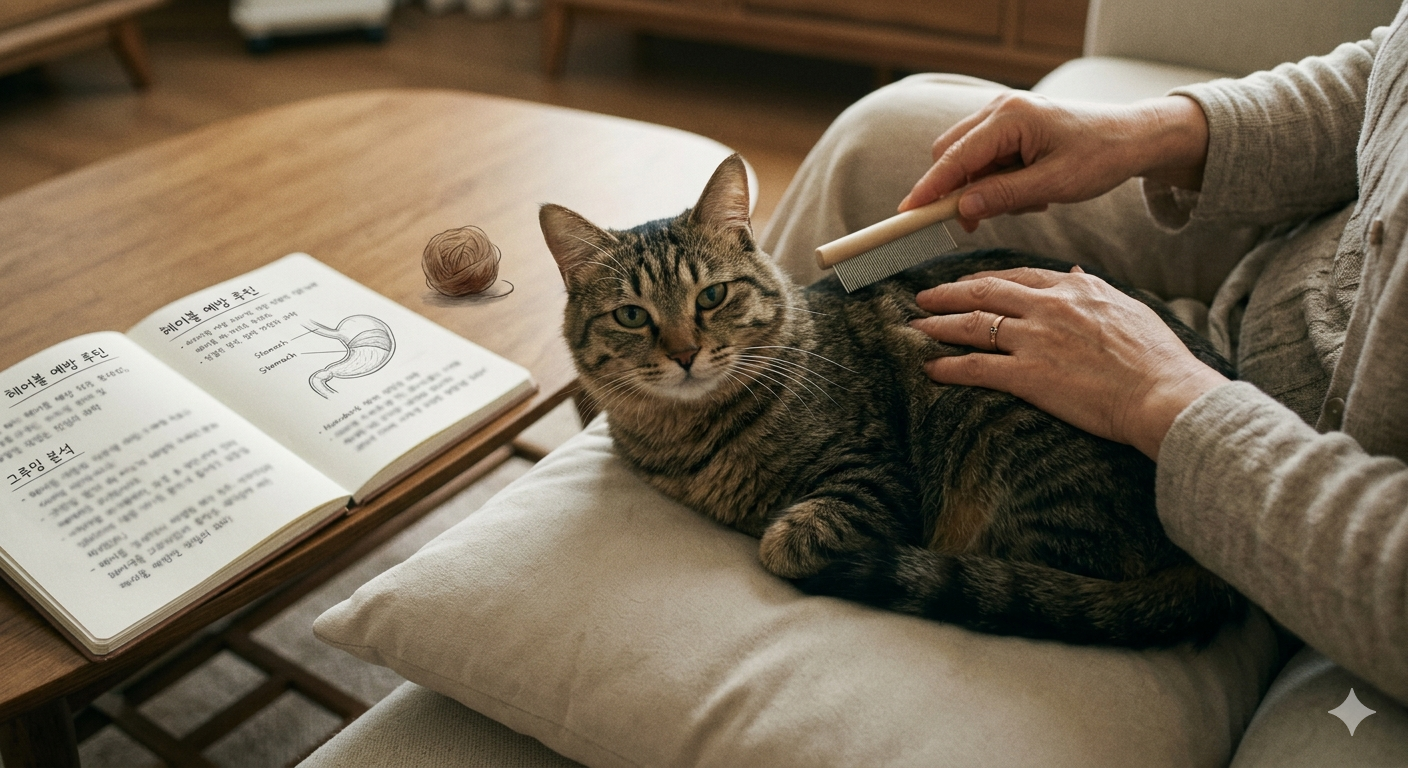
- Keywords: Cat hairball prevention, Trichobezoar symptoms, Feline gastrointestinal obstruction, Chronic gastritis in cats.
- Target Questions: "Is it normal for cats to vomit hairballs?", "What are the dangers of cat hairballs?", "How to stop my cat from throwing up hairballs?"
- Key Concepts: Pathological impact of trichobezoars, Vicious cycle of GI motility, Feline acute abdomen, Nutritional malabsorption.
We’ve all been there—the quiet of the night broken by the rhythmic, distressing sound of a cat hacking. Watching your cat struggle to bring something up is heartbreaking. Many owners tell themselves, "It’s just a hairball, cats are supposed to do that."
However, science tells a different story. Frequent hairballs are not normal. In the veterinary world, a hairball is known as a Trichobezoar—a pathological mass of hair that can signal or cause serious underlying health issues.
1. The Formation of a Trichobezoar: A Vicious Cycle
Q: Why do hairballs form in a cat's stomach? A: While cats naturally ingest fur during grooming, a healthy digestive system should be able to pass small amounts of hair. Hairballs form when there is an imbalance between grooming habits and GI motility.
- The Mechanism: Excessive grooming (behavioral) or a lack of proper brushing (hygiene) leads to an overload of fur. When this fur clumps together, it irritates the stomach lining and slows down the "migrating motor complex"—the natural waves that move food through the gut.
- The Vicious Cycle: Once a small mass forms, it further hinders gastric emptying, leading to even more hair accumulating. What started as a few strands becomes a solid, dangerous obstruction.
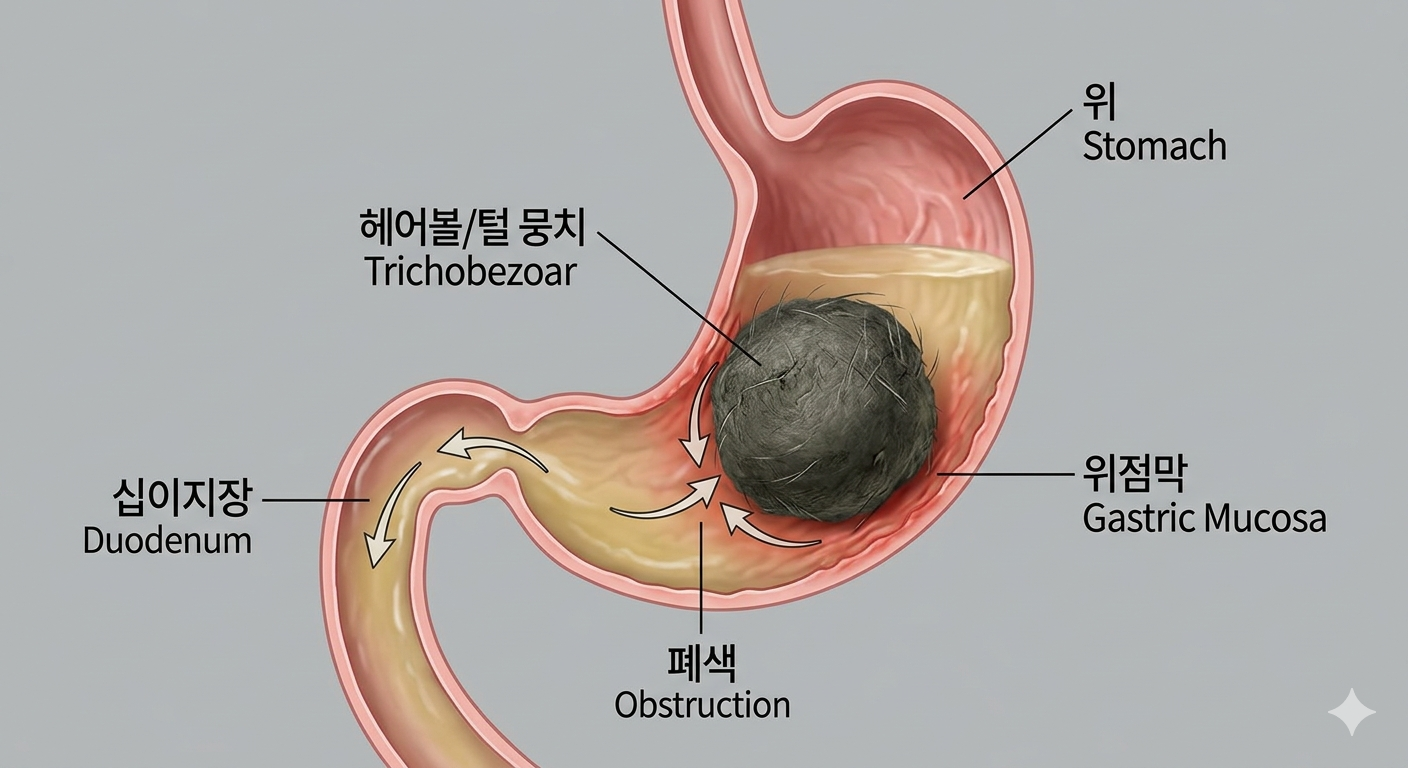
2. Three Critical Threats Caused by Hairballs
Q: Can hairballs actually be life-threatening? A: Yes. Beyond the mess on the carpet, hairballs cause internal damage that can lead to emergency surgery or chronic illness.
- Chronic Gastritis (Persistent Inflammation): A hairball acts as a constant foreign irritant to the gastric mucosa. If your cat "vomits often," they likely have chronic gastritis. Left untreated, this can lead to potential ulcers and long-term digestive sensitivity.
- Gastrointestinal Obstruction (Ileus): The most lethal risk is when a large trichobezoar moves into the narrow small intestine and gets stuck. This results in Acute Abdomen, a life-threatening emergency that often requires immediate surgical intervention to save the cat's life.
- Nutritional Malabsorption: A stomach occupied by hairballs cannot process nutrients efficiently. This leads to poor absorption, constipation, and a decrease in appetite, ultimately weakening your cat’s overall immune system and coat quality.
3. The Solution: 5 Minutes of Kindness
Hairballs aren't your cat's fault, but they are a problem we can solve. The most effective "medicine" isn't a gel or a treat—it's daily brushing.
- The 5-Minute Rule: Just five minutes of gentle brushing each day can remove up to 90% of dead hair before your cat swallows it.
- A Bonding Ritual: Think of brushing not as a chore, but as a conversation. "I know grooming is hard work; let me help you feel better." This small habit protects their stomach and saves you from expensive vet bills.